
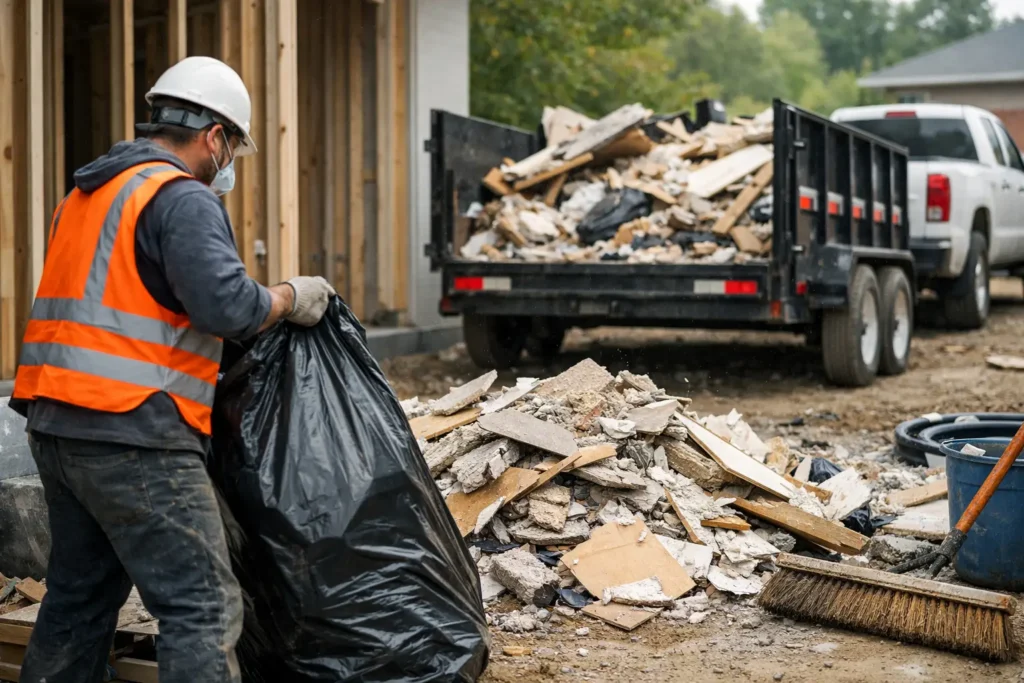
A job can be 90 percent done and still feel nowhere close if debris is stacked in the wrong place, walk paths are blocked, and the final sweep keeps getting pushed to tomorrow. That is why a solid construction cleanup planning guide matters before the first load of demo debris hits the ground. Cleanup is not the last chore on the list. It is part of keeping the whole project moving.
Contractors know this already. Homeowners figure it out fast once a renovation starts. Property managers usually feel it when one trade finishes, the next trade is delayed, and the site still looks like a storm hit it. Mess slows decisions down. It creates safety issues, makes inspections harder, and adds stress to jobs that are already tight on schedule.
What a construction cleanup planning guide should actually do
A good plan is not just a note that says remove debris at the end. It should answer a few basic questions early. What materials are coming out. Where will debris go during the job. Who is responsible for keeping access clear. When will haul-off happen. What needs to stay protected while cleanup work is happening.
That sounds simple because it is. The problem is most cleanup problems come from small misses, not big disasters. A pile of drywall scraps near the front entry turns into blocked access for flooring crews. Broken tile gets mixed with packaging and now loading takes longer. A remodel with no defined staging area ends up spreading debris across the driveway, garage, and side yard.
Planning cleanup upfront cuts down on that kind of drift.
Start with the debris, not the broom
Before the work starts, look at the type of waste the job will create. Demo debris from a bathroom remodel is different from framing scraps on a new addition. Concrete chunks, cabinets, flooring, drywall, pallets, cardboard, fixtures, and brush all handle a little differently in the field.
This matters because material type affects labor, loading time, equipment needs, and disposal planning. Heavy debris like tile, concrete, and roofing material can stack up fast and create a bigger hauling issue than people expect. Lighter material like cardboard and trim waste takes up space quickly and clutters work zones even if it does not weigh much.
A practical construction cleanup planning guide should separate debris into at least three buckets in your mind. First is heavy material. Second is bulky material. Third is general site trash. If you know what is coming, you can avoid mixing everything into one messy pile that takes twice as long to sort and remove later.
Think in phases, not one final pickup
One of the biggest mistakes on active jobs is treating cleanup like a single event. Most jobs need more than that. There is usually rough cleanup during demolition or framing, another pass before finish trades, and a final cleanup before turnover.
If cleanup only happens at the end, debris starts controlling the site. That leads to slower work, tighter staging, and more chances for property damage. It is usually better to schedule haul-off around key project phases instead of waiting until every square foot is buried in scraps.
For example, after demo is often the right time to clear out heavy material and oversized debris. Mid-project is when packaging, cutoff waste, and general clutter start building up. Final cleanup is more about detail, access, appearance, and getting the property ready for the next step.
Protect access and staging from day one
Every site needs a plan for where material goes and where it does not. This gets overlooked on smaller residential jobs because the footprint feels manageable at first. Then the driveway fills up, the side yard gets used as overflow, and the homeowner has to step over debris to reach the front door.
Pick one or two debris staging areas early. Keep them close enough to the work zone to be useful, but not so close that they interfere with crews, deliveries, or access. If the site has limited space, that is your signal to plan more frequent removal instead of larger piles.
Access matters just as much as staging. Walkways, driveways, gates, garage entries, and trailer access points should stay usable. A cleanup plan that blocks the next trade is not much of a plan.
On occupied properties, cleanup needs a tighter standard
A lived-in home, rental turn, or partially occupied commercial space changes the job. You are not just managing debris. You are managing disruption.
That usually means tighter work zones, more attention to dust and loose material, and faster removal of bulky items. Homeowners may tolerate active work. They usually do not tolerate debris spreading into areas that should stay functional. Property managers are dealing with turnover timing, tenant expectations, and showing readiness. In those settings, cleanup has to be built into the schedule, not squeezed in around everything else.
Assign responsibility before the site gets messy
A lot of cleanup issues come from one simple problem. Everyone assumes someone else is handling it.
If multiple trades are on site, spell out who is doing daily pickup, who is stacking debris, and who is calling for haul-off. If a GC is managing the site, that point of contact should also control the cleanup timing. If it is a homeowner-managed remodel, decide early whether the contractor is handling debris or an outside cleanup crew is being scheduled.
Without clear responsibility, debris lingers. Then cleanup becomes a frustration instead of a routine part of the job.
This is also where communication matters. If haul-off needs truck access, say that ahead of time. If materials need to be separated, mark the piles. If a pickup needs to happen before another trade arrives, put it on the schedule like any other task.
Match the cleanup plan to the job size
Not every project needs the same approach. A kitchen remodel may only need one defined staging area and one or two removals during the project. A full property cleanout after renovation can need labor, sorting, multiple loads, and tighter coordination with other site work.
Small jobs get in trouble when people underplan because the footprint looks simple. Larger jobs get in trouble when people assume cleanup can just absorb itself into the workflow. Both create delays.
A useful construction cleanup planning guide should scale with the project. More debris volume means more structure. Heavier material means more attention to loading conditions and surfaces. Tighter deadlines mean less room for debris to sit around waiting for the convenient moment.
Watch for the hidden slowdowns
The obvious mess is easy to spot. The hidden slowdowns are what throw schedules off.
Packaging waste is one. New fixtures, flooring, cabinets, and appliances create a surprising amount of cardboard, foam, wrap, and pallet material. It is light, but it spreads fast and eats up space. Another issue is mixed debris. Once heavy material, reusable items, and trash all get piled together, every cleanup step takes longer.
Then there is the last 10 percent problem. The site is mostly done, so cleanup gets treated like minor detail work. In reality, that final push is often when access, presentation, and turnover matter most. If debris removal is still unresolved at that stage, the finish line gets muddy.
When to bring in a dedicated cleanup crew
Sometimes the crew on site can handle daily pickup and basic debris control. Sometimes that is not the best use of their time.
If your skilled labor is stopping to load out piles, drag heavy material, or deal with leftover junk from previous phases, the math changes fast. A dedicated cleanup and hauling crew can clear bottlenecks, free up trades, and help the site stay workable without pulling your main crew off productive work.
That is especially true on tight residential sites, rental turnovers, light demolition projects, and jobs where debris is heavier than expected. One crew focused on building and another focused on cleanup usually moves cleaner than asking everyone to do both halfway.
In Northeast Georgia, that often comes up on remodels, estate transitions, rental property cleanouts, and contractor jobs where the work is moving but the debris keeps piling up. A local crew that understands active job sites can make the handoff simpler because they know cleanup is not separate from production. It supports production.
Build cleanup into the schedule and budget
Cleanup usually causes problems for one of two reasons. It was not scheduled, or it was treated like an afterthought on cost.
If you know a job will generate repeated debris, plan for repeated removal. If access is tight, factor that in. If material is heavy or awkward, account for labor and equipment. Straightforward cleanup planning usually costs less than job delays, damaged surfaces, or extra labor spent revisiting the same mess three times.
This is where clear pricing and clear scope help. Nobody likes vague cleanup assumptions halfway through a project. It is better to define what is being removed, when pickups are expected, and what site conditions affect the work.
A clean site does not mean a perfect site. It means people can work, move, and finish without fighting the mess. That is the standard worth planning for from the start.