A single cut into the wrong wall can damage electrical wiring, plumbing, or structural components. That is why demolition safety begins well before anyone picks up a hammer. Even a relatively small project, such as removing old cabinets or replacing flooring, can expose homeowners to unexpected hazards.
The safest approach to residential demolition is to identify potential hazards, understand the structure being removed, secure the work area, and plan for proper debris disposal.** Knowing when to involve qualified professionals is equally important.
For homeowners preparing for remodeling projects, understanding why junk removal is important before moving or renovating can also help with organizing the property and keeping work areas accessible.
This guide outlines essential demolition safety precautions to help homeowners prepare for residential improvement projects while reducing avoidable risks.
1. Understand What You're Demolishing Before You Begin
Not every wall, fixture, or structure can be safely removed using the same approach. Before beginning demolition, determine which components are structural and which are non-structural.
Common light demolition projects include:
- Removing old kitchen cabinets and countertops
- Tearing out bathroom fixtures and finishes
- Removing flooring and tile
- Dismantling detached sheds
- Removing deteriorated decks
- Taking down certain non-load-bearing interior partitions
However, a wall that appears non-structural may conceal plumbing, electrical wiring, HVAC components, or other building systems.
Before removing any building component, evaluate how it connects to surrounding structures and whether its removal could affect the property's stability.
Safety Tip: Never assume a wall is non-load-bearing based on appearance alone. If its structural function is uncertain, arrange an assessment by a qualified professional before beginning work.
2. Identify Electrical, Plumbing, and Gas Hazards
Hidden utilities are among the most significant hazards associated with residential demolition.
Accidentally damaging an electrical line, water pipe, or gas connection can result in serious injuries, property damage, and potentially dangerous conditions.
Before demolition begins:
- Identify utilities running through or near the work area.
- Arrange for affected electrical circuits to be disconnected and verified as de-energized by a qualified electrician.
- Have plumbing and gas lines properly isolated when necessary.
- Locate accessible shutoff valves and emergency controls.
- Confirm that required utility disconnections have been completed before disturbing walls, floors, or fixtures.
For outdoor projects involving excavation or ground disturbance, contact Georgia 811 before digging so underground utility lines can be marked.
Utility coordination should be completed before demolition work is scheduled, particularly when the project involves kitchens, bathrooms, or outdoor structures.
Safety Tip: Turning off a light switch or unplugging an appliance does not necessarily make concealed electrical wiring safe to disturb.
3. Wear Appropriate Demolition Safety Equipment
Demolition work can produce sharp debris, airborne dust, falling materials, and high noise levels.
Appropriate personal protective equipment helps reduce exposure to these hazards.
Essential Demolition Safety Equipment
- Safety glasses or goggles: Help protect the eyes from flying particles and debris.
- Cut-resistant work gloves: Reduce exposure to sharp edges, splintered wood, and metal.
- Protective footwear: Helps protect against falling objects and sharp materials.
- Hard hat: Provides protection against overhead hazards when required.
- Hearing protection: Helps reduce exposure to loud equipment and demolition activities.
- Properly selected respirator: Provides protection against specific airborne hazards when appropriate and correctly fitted.
Respiratory protection should be selected based on the materials involved and the actual exposure risks.
An ordinary dust mask is not sufficient for every type of demolition dust or hazardous material.
If asbestos, lead-based paint, or other potentially hazardous substances are suspected, stop work and consult an appropriately qualified professional.
4. Prepare and Secure the Demolition Area
Proper site preparation can help prevent injuries, protect surrounding property, and improve the efficiency of demolition work.
Before starting, take the following precautions:
- 1.Remove furniture, decorations, and personal belongings from the immediate work area.
- 2.Establish barriers to prevent children, pets, and unauthorized individuals from entering.
- 3.Protect nearby surfaces, windows, and fixtures from falling debris.
- 4.Plan a clear route for removing demolished materials.
- 5.Maintain unobstructed exits and walkways.
- 6.Provide adequate lighting throughout the work area.
- 7.Use appropriate dust containment measures to limit debris spreading into occupied spaces.
For larger renovation projects, clearing unnecessary household items beforehand can create additional working space.
Our junk removal services can assist with removing eligible unwanted furniture, household clutter, and other materials before renovation work begins.
Homeowners in Winder and surrounding Northeast Georgia communities should also consider how rain and wind may affect outdoor demolition debris.
Loose materials should be secured to prevent them from spreading across the property or creating additional hazards.
Safety Tip: Keep the demolition area organized throughout the project rather than waiting until all dismantling work is complete.
5. Watch for Hazardous Building Materials
Older homes and renovation projects may contain building materials that require specialized assessment and handling.
Disturbing these materials without appropriate precautions can create serious health and safety risks.
Asbestos-Containing Materials
Some older flooring, insulation, ceiling materials, and other building products may contain asbestos.
Cutting, sanding, or breaking asbestos-containing materials can release hazardous fibers into the air.
Do not disturb suspected asbestos-containing materials until they have been properly evaluated.
Lead-Based Paint
Homes built before 1978 may contain lead-based paint.
Demolition and renovation activities can generate hazardous lead dust when painted surfaces are disturbed.
Applicable EPA lead-safe renovation requirements may apply to certain contractor-performed projects in older residential properties.
Homeowners should arrange appropriate evaluation and follow applicable safety requirements before disturbing potentially affected surfaces.
Mold and Moisture Damage
Water-damaged walls, flooring, cabinets, and other building components may conceal mold or deteriorated materials.
Extensive contamination or significant structural deterioration may require specialized assessment and remediation.
If potentially hazardous conditions are discovered, stop work until the appropriate next steps have been determined.
6. Plan for Safe Demolition Debris Removal
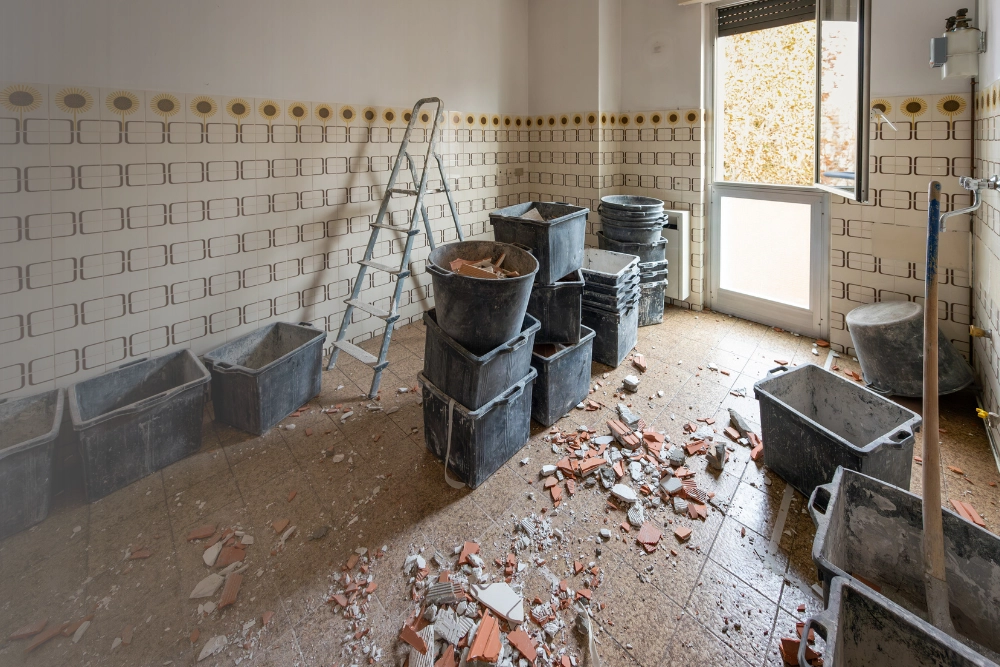
Demolition debris can accumulate quickly, particularly during kitchen renovations, bathroom tear-outs, flooring replacement, and exterior structure removal.
Broken tile, splintered lumber, exposed nails, and sharp metal can create hazardous conditions when left scattered throughout the work area.
Effective demolition cleanup includes:
- Keeping debris away from entrances and walkways
- Separating sharp materials where practical
- Avoiding overloaded containers and unstable debris piles
- Using appropriate lifting techniques and handling equipment
- Identifying materials requiring specialized disposal
- Keeping debris properly contained during transportation
Large or heavy materials can also create lifting hazards. Avoid moving oversized components without suitable equipment and assistance.
Separate Construction Materials When Appropriate
Different demolition materials may require different disposal methods.
For example, concrete, drywall, metal, lumber, and certain flooring materials may not be accepted through the same waste collection programs.
Our guide on how to dispose of construction debris explains how homeowners can organize renovation waste, identify disposal considerations, and manage debris more efficiently.
For projects generating substantial amounts of waste, our construction debris removal services can assist with loading and hauling eligible materials from residential and commercial properties.
Planning debris removal before demolition begins can help prevent waste from interfering with other renovation activities.
7. Know When to Hire a Professional Demolition Team
Some demolition tasks may appear straightforward but become significantly more complicated once building materials are removed.
Professional assistance may be appropriate when a project involves:
- Large or heavy structures
- Uncertain structural conditions
- Concealed electrical or plumbing systems
- Extensive debris removal
- Difficult access or restricted working space
- Materials that may contain hazardous substances
- Demolition activities requiring specialized equipment
Not every demolition company performs structural demolition, hazardous-material abatement, or utility disconnections.
Before hiring a contractor, confirm the scope of work and determine whether additional qualified specialists are required.
At Drop Zone CleanUp Co., our light demolition services support eligible non-structural removal projects, including cabinet removal, flooring tear-outs, small exterior structures, and associated debris hauling.
Our work is limited to the services and materials approved within the agreed project scope. Structural demolition, environmental remediation, and utility work requiring licensed tradespeople must be handled separately.
For homeowners in Winder, Braselton, Jefferson, Athens, and surrounding communities, our team can help determine whether a proposed project falls within our light demolition service capabilities.
8. Check Local Requirements Before Starting Demolition
Depending on the project type and location, demolition work may require permits, inspections, utility coordination, or other approvals.
Requirements can vary between municipalities and counties.
Before beginning work, contact the appropriate local building department to determine which regulations apply to your property.
For example, removing interior finishes may involve different requirements than dismantling a detached structure or modifying building components.
Projects involving structural changes, utility systems, or significant alterations may require additional approvals and qualified professionals.
Checking these requirements early can help prevent project delays, compliance concerns, and unsafe work conditions.
9. Complete a Final Safety Inspection After Demolition
Demolition safety does not end when the final component has been removed.
Before beginning repairs or the next phase of renovation, inspect the work area for remaining hazards.
A final walkthrough should include:
- Checking for exposed nails, screws, and sharp edges
- Confirming that loose debris has been removed
- Ensuring walkways and exits remain accessible
- Identifying exposed wiring or plumbing that requires professional attention
- Checking floors and surrounding surfaces for damage
- Confirming that remaining structures are stable
- Removing dust and debris using appropriate methods
Do not restore power or reconnect utilities until the necessary work has been completed and verified by appropriately qualified professionals.
The work area should be assessed for safety before allowing normal household access or beginning the next stage of construction.
Make Demolition Safety Part of Your Renovation Plan
Successful residential demolition requires more than removing unwanted materials.
It involves identifying hazards, protecting occupants, maintaining a controlled work area, and ensuring that debris is handled appropriately.
By understanding demolition safety precautions and recognizing when professional assistance is necessary, homeowners can prepare more effectively for renovation and property improvement projects.
At Drop Zone CleanUp Co., we provide eligible light demolition, debris hauling, and cleanup services for residential and commercial properties throughout Winder and surrounding Northeast Georgia communities.
Our veteran-owned team emphasizes dependable service, clear communication, and an organized approach to non-structural demolition projects.
If you are planning a demolition project, call 706-714-0156 or contact our team to discuss your project and confirm the appropriate removal and cleanup services.
Frequently Asked Questions
What Are the Most Important Demolition Safety Precautions?
Identify structural and utility hazards, secure the work area, use appropriate protective equipment, assess potentially hazardous building materials, and establish a debris removal plan. If a hazard cannot be safely evaluated, consult a qualified professional before continuing.
Can Homeowners Safely Perform Their Own Demolition?
Some limited non-structural demolition tasks may be suitable for experienced homeowners. However, projects involving concealed utilities, uncertain structural conditions, hazardous materials, or heavy components should be evaluated by qualified professionals.
What Protective Equipment Is Needed for Home Demolition?
Depending on the work involved, protective equipment may include safety goggles, cut-resistant gloves, protective footwear, hearing protection, a hard hat, and appropriate respiratory protection. Equipment should be selected according to the specific hazards present.
Do I Need a Permit for Light Demolition in Georgia?
Permit requirements depend on the nature of the work and the local jurisdiction. Contact your city or county building department before beginning demolition to determine whether permits, inspections, or other approvals are required.
How Should Demolition Debris Be Handled?
Keep debris contained, maintain clear walkways, separate potentially hazardous materials, and use appropriate disposal methods. Professional debris hauling can help manage large quantities of construction and demolition waste.
Request Service